 Admin
Admin Frontline learning is changing fast. Instead of relying mainly on long classroom sessions, many organisations are moving toward shorter, more practical training that fits into the working day. Recent research from SHRM, the World Economic Forum, McKinsey, Deloitte, and HBR points in the same direction: the most effective learning for frontline teams is now brief, relevant, and closely tied to real tasks.
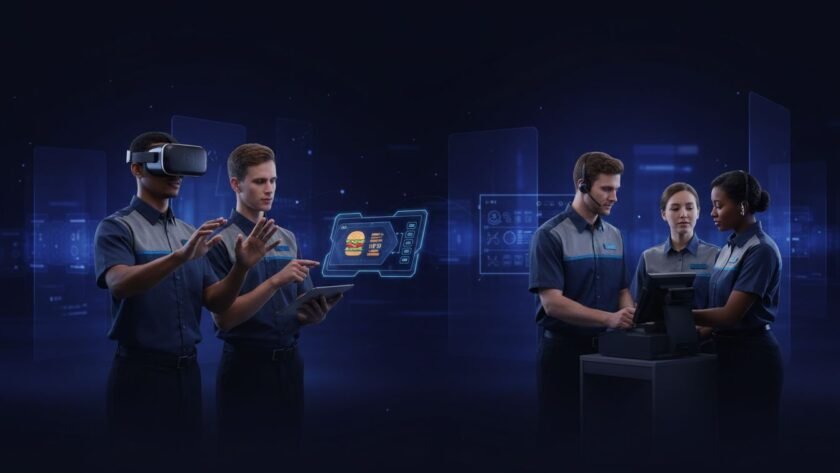
For crew members, trainers, and managers, the idea is simple. People learn best when training helps them solve today’s problem, practise a skill on shift, and get support from someone nearby. That is why modernizing frontline learning increasingly means combining VR, micro-modules, and shoulder-to-shoulder coaching into one blended approach rather than treating them as separate tools.
Why frontline learning needs a modern reset
There is growing pressure on employers to improve skills while using training time more carefully. HBR notes that training investment and average learning hours have been under pressure, even as the need for new capabilities keeps rising. At the same time, McKinsey reports that nearly three-quarters of workers surveyed say they experience skill gaps, including basic operational and technical skills.
That gap matters because frontline training is no longer only about compliance or onboarding. It is increasingly tied to productivity, consistency, customer experience, and retention. McKinsey argues that investing in frontline AI and operational skills can unlock meaningful productivity gains, especially in operations-heavy environments.
This is why a modern reset is needed. Instead of asking frontline employees to step away from work for long generic sessions, organisations are redesigning learning so it is shorter, more targeted, and easier to apply immediately. In practice, that means delivering help at the point of need and reinforcing it with real human coaching.
Micro-modules bring learning back into the flow of work
One of the clearest trends in frontline learning is the rise of microlearning. SHRM says L&D leaders should look for mobile-first platforms that deliver training in “microbursts” for frontline workers. This approach recognises a basic reality: many frontline roles do not allow long uninterrupted periods for formal learning.
Micro-modules work well because they are brief, focused, and contextual. Rather than asking someone to sit through a broad course, a micro-module can show one process, one safety reminder, one service skill, or one equipment step. SHRM’s recent coverage argues that learning should be brought back into the flow of work, where people can use it right away instead of learning in a sterile environment that feels disconnected from the job.
For managers and trainers, this makes learning easier to schedule and easier to reinforce. A short module before a shift, during a quiet period, or before a new task can be more useful than a long session employees struggle to remember later. It also helps reduce overload, which is especially important when teams are busy and priorities shift quickly.
VR is becoming practical, not experimental
Virtual reality is no longer just a future idea for frontline training. The World Economic Forum highlights a large-scale case from Midea, where a VR and GenAI training platform helped reduce core skill qualification time by 63% and cut turnover by 40%. That is a strong sign that immersive learning can have practical value when it is linked to real operational goals.
VR is especially useful for situations where practice matters. It allows employees to repeat tasks, walk through procedures, and build confidence in a controlled setting before performing the work live. For frontline environments, this can be helpful for equipment use, safety routines, troubleshooting, and other skills where mistakes can be costly or stressful.
The same WEF case also shows why VR is becoming easier to scale. Midea’s platform converted more than 28,000 documents into online courses, supported four languages, and included voice-to-text functionality. That matters because frontline workforces are often diverse, busy, and spread across different roles and levels of experience. Tools that support multilingual, conversion-friendly training content are more likely to be used consistently.
Shoulder-to-shoulder coaching still matters most on shift
Even with better digital tools, human support remains essential. McKinsey’s 2025 manufacturing research stresses that interpersonal capabilities such as coaching matter as work changes and ongoing learning becomes more important. Digital content can explain a task, but a coach standing beside someone can spot hesitation, correct technique, and build confidence in the moment.
Deloitte’s 2025 frontline worker research makes this even more relevant. Frontline employees were the least likely to report feeling supported and connected, even though they often felt motivated and less distracted than hybrid or knowledge workers. That support gap suggests training should do more than deliver information. It should also strengthen belonging, trust, and day-to-day guidance.
Shoulder-to-shoulder coaching helps close that gap because it turns learning into a shared activity. A shift manager, trainer, or experienced crew member can demonstrate a process, observe performance, and give immediate feedback. That kind of reinforcement is hard to replace and is often what turns a short lesson into a lasting habit.
AI can support coaching without replacing managers
Recent guidance from the World Economic Forum and McKinsey suggests that AI is becoming useful in frontline learning when it supports coaching rather than trying to replace it. WEF notes that conversational agents can deliver coaching sessions, support microlearning, provide on-the-job guidance, and do so in multiple languages. This can make help more accessible during a shift.
McKinsey also describes practical examples such as a “coach agent” that gives personalised feedback on job-related skills. The wider 2025 trend is often described as “coach, not chase,” meaning managers can use fragmented workforce data more effectively and spend less time hunting for issues. Instead, they can focus on specific coaching conversations that improve performance.
Used well, AI can make coaching more timely and consistent. It can suggest the next micro-module, surface a common mistake, or provide a refresher before a task. But it works best when a real manager or trainer reviews progress, adds context, and helps employees apply what they learned in the reality of the workplace.
Learning hubs and embedded practice make training stick
Another important development is the move toward learning spaces that sit close to the work itself. The World Economic Forum points to Mettler Toledo’s on-site Digital Learning Hub, which has operated in the same room as a production line since 2022. This setup supports learning, collaboration, and ongoing skill development without separating training too far from daily operations.
This idea is useful because it reduces friction. If learning tools, guides, and coaching conversations are available on or near the job, employees are more likely to use them. Embedded learning also sends a clear message that development is part of work, not something extra that only happens occasionally.
The outcomes can be meaningful. WEF reports that one digital empowerment programme increased frontline skill training participation by 49%, raised engagement scores by 21%, and reduced voluntary turnover by 80% in a cited case. While every workplace is different, the pattern is clear: when learning is accessible and connected to the job, employees are more likely to engage with it.
What a blended frontline learning model looks like
The strongest model emerging from 2025 research is a blended one. SHRM, WEF, McKinsey, and Deloitte all point to a hybrid approach where digital learning and human reinforcement work together. In this model, micro-modules deliver quick, relevant knowledge; VR supports hands-on practice; AI helps personalise support; and coaches on shift turn learning into performance.
For example, a new employee might start with a short mobile module covering one task, then use VR to practise a realistic scenario, then complete the task live with a trainer beside them. After that, a manager can check progress, answer questions, and assign another short module based on what the employee needs next. This sequence is practical because each element has a clear job.
It also aligns with the wider McKinsey view that technology and talent strategies should be integrated. Buying new tools is not enough on its own. Organisations need a company-wide training and transformation approach that gives frontline employees the skills, support, and coaching needed to use those tools confidently and productively.
How managers can modernize frontline learning step by step
If you are planning to improve frontline learning, start by identifying the moments that matter most. Focus on tasks where people commonly need help, where errors are costly, or where confidence is low. These are the best places to introduce short modules, quick refreshers, or coaching prompts rather than building long programmes first.
Next, match the format to the skill. Use micro-modules for quick reminders and single-topic instruction. Use VR for realistic practice where repetition and confidence matter. Use AI tools for multilingual support, coaching prompts, or personalised follow-up. Then make sure a manager, trainer, or buddy is available for shoulder-to-shoulder reinforcement on shift.
Finally, measure more than course completion. Look at qualification speed, performance consistency, engagement, support levels, and retention. The recent evidence suggests that modernizing frontline learning works best when it improves both capability and the employee experience. That means the goal is not simply more training content, but better support at the point of need.
Modernizing frontline learning is not about replacing people with technology. It is about using the right mix of tools to make learning faster, more relevant, and easier to apply during real work. Micro-modules help employees learn in small, useful bursts. VR makes practice safer and more realistic. Coaching ensures the learning becomes part of day-to-day performance.
The direction of travel is clear. The future of frontline learning is hybrid: digital where speed and access matter, human where confidence and connection matter most. For organisations that want better productivity, stronger retention, and more supported teams, VR, micro-modules, and shoulder-to-shoulder coaching are becoming the foundation of a smarter training model.