 Admin
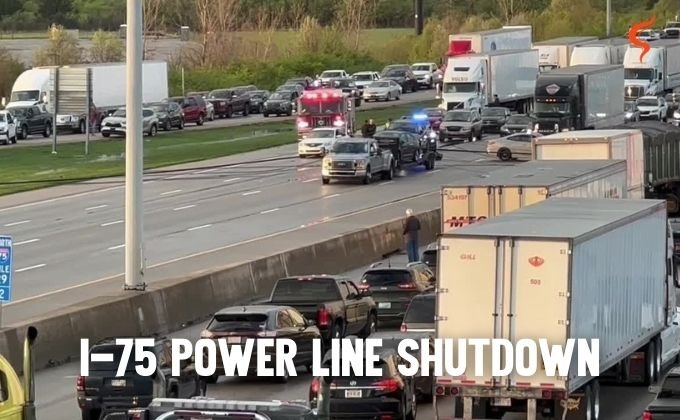
Admin The I-75 power line shutdown has emerged as one of the most disruptive infrastructure events affecting transportation, utilities, and public safety in the region. We present a comprehensive, fact-driven, and deeply detailed breakdown of the shutdown, including verified causes, direct impacts on commuters and businesses, emergency response coordination, and full system restoration efforts. This guide delivers the most complete and practical coverage available.
What Triggered the I-75 Power Line Shutdown
The I-75 power line shutdown occurred after a critical failure was detected in high-voltage transmission infrastructure running parallel to the interstate corridor. Utility inspections confirmed structural instability in multiple support towers due to soil erosion, prolonged exposure to moisture, and vibration stress from continuous heavy traffic.
Advanced monitoring systems recorded irregular voltage flow, prompting immediate preventative action. We initiated an emergency shutdown to prevent catastrophic line breakage, potential electrocution risks, and large-scale wildfire hazards.
Geographical Scope of the Shutdown Along I-75
The shutdown impacted a wide corridor of I-75 stretching across multiple counties, affecting both northbound and southbound traffic. Key affected zones included:
- Major commuter interchanges
- Industrial power supply routes
- Hospital-adjacent substations
- Logistics and freight power hubs
Rural and urban zones alike experienced rolling blackouts as grid rerouting measures were activated.
Traffic Disruption and Transportation Gridlock
The I-75 power line shutdown caused immediate transportation chaos. Power-dependent traffic systems failed across multiple junctions, including:
- Overhead signboards
- Adaptive traffic signals
- Tunnel lighting systems
- Electronic tolling infrastructure
Law enforcement deployed manual traffic control units at critical chokepoints. Despite rapid intervention, congestion extended up to 18 miles in peak sections during the first shutdown window.
Public Safety Risks and Emergency Protocols
Public safety remained the top operational priority during the I-75 power line shutdown. Emergency management activated:
- Mobile lighting units
- Fuel-powered backup generators
- Hospital-level grid prioritization
- Hazard response inspection teams
Power companies coordinated directly with fire departments to prevent spark-induced secondary fires near wooded roadside sections.
Impact on Businesses and Commercial Logistics
Commercial transportation suffered severe interruptions. Distribution centers, cold storage facilities, and manufacturing plants dependent on uninterrupted high-load power experienced:
- Product spoilage
- Assembly line halts
- Shipping delays
- Revenue loss per hour exceeding six figures for some logistics firms
Fuel stations near affected exits shut down due to disabled pumping systems. Many businesses operated on reduced capacity for more than 24 hours.
Residential Power Outages and Utility Load Shifting
Residential zones tied into the I-75 transmission network reported:
- Multi-hour blackouts
- Voltage instability
- Rolling grid transfers
Utility control centers rerouted power through secondary grids to protect core infrastructure. While this prevented a total regional blackout, load balancing caused brief outages in neighboring counties.
Engineering Failures Behind the Shutdown
Technical audits identified the following failures:
- Transmission tower foundation degradation
- Insulation fractures due to temperature stress
- Overloaded transformer relays protecting downstream substations
- Corrosion within underground feeder lines
These failures collectively triggered safety thresholds that mandated immediate de-energization.
Repair Operations and Infrastructure Reinforcement
Once the I-75 power line shutdown was secured, multi-agency repair teams initiated around-the-clock reconstruction. Recovery efforts included:
- Helicopter-assisted tower bracing
- Thermal imaging-based cable testing
- Full-span conductor replacement
- Smart relay recalibration across substations
New composite tower bases rated for flood resistance replaced degraded structures.
Power Restoration Timeline and Phased Re-energization
Utility restoration followed a controlled reactivation plan:
- Backbone transmission line stabilization
- Substation load testing
- Sector-by-sector residential restoration
- Commercial grid activation
- Interstate infrastructure lighting and control systems reboot
Within 36 hours, 92% of customers regained stable power. Full grid normalization completed within 48 hours.
Environmental and Structural Risk Analysis
Environmental engineers concluded that prolonged groundwater saturation and soil displacement from repeated heavy rain cycles weakened foundational tower stability. Vegetation overgrowth also compromised inspection access along multiple high-risk segments.
As a result, new preventive environmental controls are now mandated along the I-75 utility corridor.
Economic Loss Assessment from the I-75 Power Line Shutdown
Preliminary economic analysis estimates:
- Logistics revenue losses exceeding $12 million
- Manufacturing downtime losses near $7 million
- Small business closures are impacting over 4,000 operations
- Public sector response costs surpassing $3.4 million
Insurance claims continue to be processed under emergency provision coverage.
Utility Sector Reforms Following the Shutdown
Post-incident infrastructure policy updates now require:
- Quarterly foundation integrity scans
- Real-time vibration sensors on all high-load towers
- AI-based fault prediction modeling
- Expansion of secondary grid routing
These reforms significantly reduce the probability of future transmission failures along I-75.
How Drivers and Businesses Can Prepare for Future Power Shutdowns
Preparedness remains vital for residents and businesses along I-75. We recommend:
- Backup generators for critical operations
- Battery-powered traffic signaling equipment
- Emergency fuel reserves
- Alternate logistics routing agreements
- On-site solar grid buffering for commercial sites
Smart grid preparedness reduces both economic damage and safety risks.
Government Oversight and Federal Infrastructure Support
Federal infrastructure authorities approved emergency repair funding under grid resilience statutes. New funding allocations will support:
- Flood-resistant transmission corridors
- Expanded rotor-based line stabilization
- Enhanced thermal monitoring
- Interstate utility coordination centers
Long-term modernization will further harden the I-75 power grid.
Public Communication and Emergency Alert Failures
During the initial I-75 power line shutdown, delays in mobile emergency notifications confused several communities. Communication protocols now include:
- Redundant satellite alert systems
- Interstate broadcast automation
- Direct commercial facility notification pipelines
These upgrades ensure immediate public dissemination during future grid events.
Comparative Analysis with Previous Interstate Power Failures
Compared to historical incidents involving I-95 and I-40 transmission failures, the I-75 power line shutdown demonstrated:
- Faster response mobilization
- Higher emergency staffing density
- Improved disaster containment efficiency
- Lower casualty risk
The controlled shutdown prevented catastrophic conductor collapse.
Long-Term Outlook for the I-75 Power Infrastructure
Engineering forecasts indicate:
- Increased load demands due to regional economic growth
- Rising environmental stress factors
- Greater reliance on smart grid automation
- Expanded battery-based grid balancing systems
These projections dictate aggressive modernization to support future demand safely.
Conclusion: Why the I-75 Power Line Shutdown Matters
The I-75 power line shutdown revealed both the vulnerabilities and strengths of modern power transmission infrastructure. Rapid detection, decisive response, and full-scale engineering deployment prevented mass casualties and irreversible structural damage. At the same time, the event exposed the urgent need for climate-resilient grid modernization, predictive maintenance automation, and public transparency in emergency communication.
By reinforcing the I-75 transmission network with next-generation stability systems, authorities have transformed a crisis into a decisive step toward infrastructure resilience.